


How Does an ATS Actually Work?
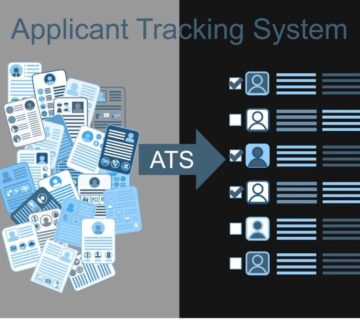
Understanding what an Applicant Tracking System is only tells half the story.The more important question is: How does an ATS actually process and evaluate the information in a resume?
Many candidates assume an ATS simply counts keywords.
In reality, ATS technology can look at the context surrounding those keywords, including where they appear, which position they are associated with, how recently the skill was used, and how long the candidate demonstrated that experience.
Step One: Resume Parsing
The process typically begins when the ATS parses the resume.
The system extracts information such as job titles, employers, dates, education, certifications, skills, and keywords.
This information is then organized into a searchable candidate profile.
This is why resume structure matters.
If the ATS cannot clearly determine which dates belong to which position, or which skills belong to which job, the information may not be interpreted as intended.
Step Two: Identifying Keywords and Related Terms
ATS technology can search for specific keywords and phrases.
However, it may also recognize relationships between terms.
For example, a resume may contain:
- “Client interfacing”
- “Customer satisfaction”
- “Service standards”
The system may associate these terms with the broader concept of: “Customer Service.”
This is one reason simply copying a job description and inserting isolated keywords into a resume is not an effective strategy.
The keywords need to appear naturally within relevant professional context.
Step Three: Keyword Weighting
This is where ATS technology becomes more sophisticated.
A keyword does not necessarily have the same significance regardless of where it appears.
Depending on the system, factors can include:
- Where the keyword appears
- How frequently it appears
- Which position contains it
- How recently the skill was used
- How long the skill was used
- Whether the skill aligns with the job title
- How closely the terminology matches the target position
For example, “Customer Service” appearing in a current Customer Service Manager position may carry more relevance than the same term appearing once in an unrelated Skills section.
This leads to an important principle:
Context can be more valuable than keyword quantity.
Why Employment Dates Matter
Dates help the ATS establish when experience was gained.
Suppose a candidate has eight years of Customer Service experience, but that experience occurred 15 years ago.
Another candidate has two recent years of Customer Service experience.
For a current Customer Service position, the more recent experience may be considered more relevant.
This is why employment dates should be clearly presented and connected to the appropriate position.
Hiding dates or replacing them with vague statements such as “several years” can make it harder for an ATS to accurately associate experience with a specific time period.
Why Job Titles Matter
Job titles are another important ATS signal.
Consider the difference between:
Customer Service Manager
and a resume that only mentions:
“customer service management.”
The first clearly establishes the candidate’s professional level and functional area.
The second describes a capability but does not necessarily establish that the candidate held a management position.
This is why accurate job titles are important.
The goal is not to change a title simply to match a job posting.
The goal is to make the actual career progression and level of responsibility clear.
What Is a Management Score?
Some ATS analysis tools provide a management score based largely on job titles.
A score may range from:
However, this should not be viewed as a definitive measurement of leadership ability.
A job title alone cannot tell the complete story.
A professional may have managed large teams, budgets, strategic initiatives, or organizational transformation while holding a title that does not generate a particularly high management score.
That is why leadership scope should also be demonstrated through the actual resume content.
What Are Industry Percentages?
Some ATS scanners also provide industry percentages.
These percentages represent how strongly the terminology in a resume aligns with particular industries.
Keywords associated with job titles and professional experience may carry greater weight when determining the top industry matches.
However, these percentages are not absolute quality scores.
A higher percentage does not automatically mean a stronger resume.
As a general guideline, an industry score above 35% may be considered excellent for a hands-on professional, while above 20% can be considered solid for a management-level professional.
But these figures should not be treated as universal hiring thresholds.
Why a High ATS Score Can Sometimes Be a Bad Thing
This is where many candidates make a mistake.
They see a lower score and respond by adding more keywords.
More keywords do not automatically create a better resume.
⚠️ Excessive Keyword Repetition Risks:
- Unnatural writing
- Information overload
- Poor readability
- Reduced credibility
- Weak human-review performance
- Potential keyword-stuffing concerns
The purpose of an ATS is not to reward the resume containing the most words.
The purpose is to help employers identify candidates whose experience is relevant to the position.
Generic ATS Scan vs. Employer Search
This distinction is extremely important.
Core Question: “How many words in this resume are associated with this industry?”
Core Question: “Does this candidate have the specific experience, skills, job titles, qualifications, and background required for this position?”
Those are two very different questions.
That is why a resume receiving an average score from a generic ATS scanner can still perform effectively when submitted to a well-matched position.
The Bottom Line
ATS optimization is not about repeating keywords until a score increases.
It is about creating a clear relationship between:
When those elements align naturally, both the ATS and the hiring manager have a much clearer understanding of the candidate.
The next step is knowing exactly how to build that alignment into the resume.
That is where ATS optimization becomes practical.

No comment